
How to Choose Between Wide-Angle and Telephoto Waterfall Photography
McDowell Creek Falls Park is one of Oregon’s most rewarding destinations for waterfall photography. This beautiful collection of waterfalls provides an ideal setting to explore how different composition techniques can transform a scene. During this trip, I photographed four unique waterfalls and compared wide-angle and telephoto approaches to create a variety of images. If you’re interested in improving your Oregon waterfall photography, this location offers an excellent opportunity to practice and refine your skills. Along the trail, I visited Royal Terrace Falls, Crystal Falls, Majestic Falls, and Little McDowell Falls, each of which presented different opportunities and challenges that influenced my compositional decisions.
*Special note: I found these waterfalls in Barbara Tricarico’s new book, Oregon Waterfalls. Be sure to check it out to find lesser known gems in Oregon state.
Understanding Waterfall Photography Composition
One of the most important decisions when photographing waterfalls is determining whether a scene will benefit more from a wide-angle composition or a telephoto composition. Wide-angle images allow you to include surrounding elements such as streams, rocks, trees, moss, and foliage to create a sense of place and lead the viewer through the scene. Telephoto compositions, on the other hand, allow you to isolate details, simplify busy environments, and focus attention on the most compelling parts of a waterfall. Throughout this trip, each waterfall required a different approach based on the available viewpoints, surrounding landscape, and the story I wanted the photograph to tell.
Oregon Waterfall Photography at Royal Terrace Falls
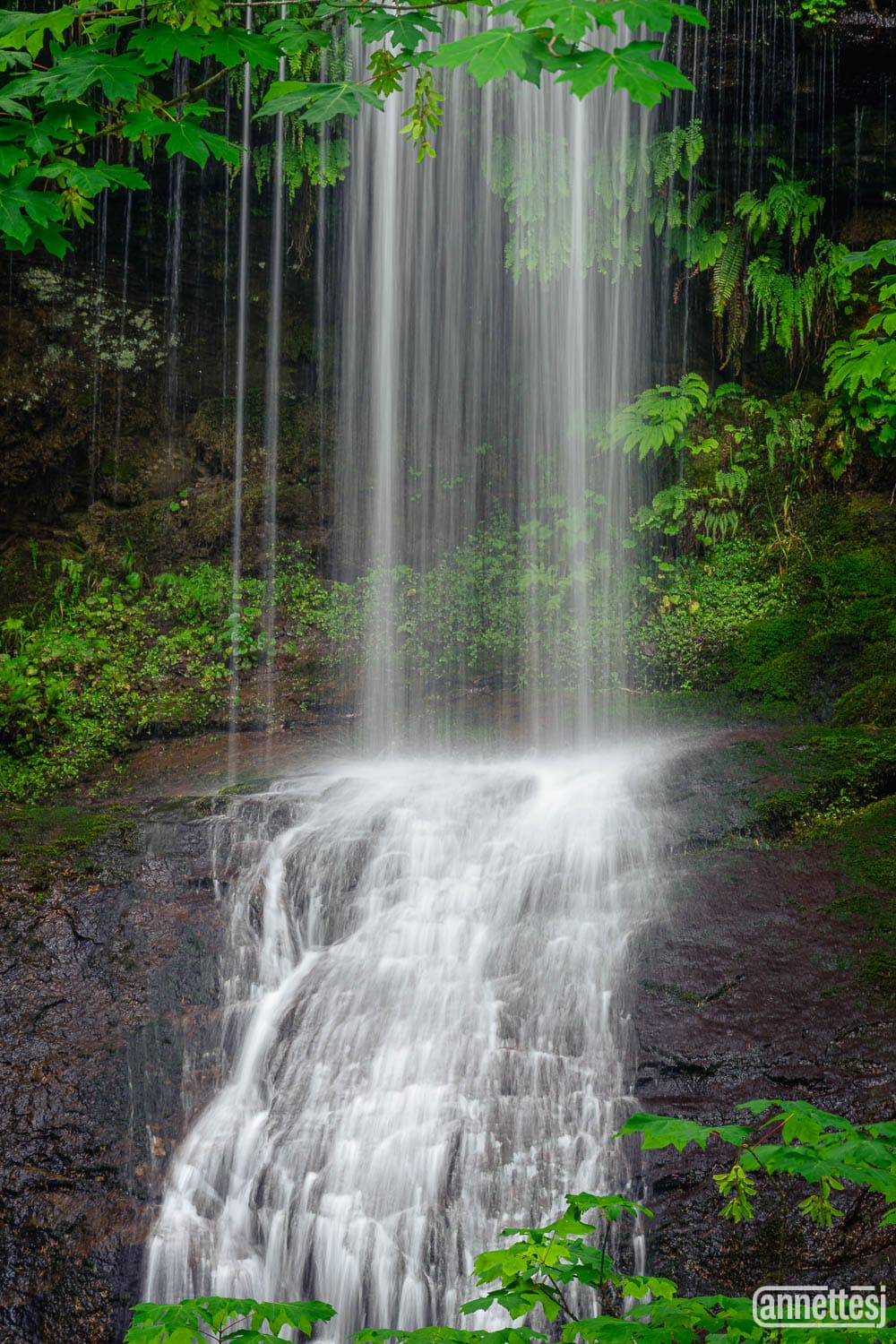
The first stop of the day was Royal Terrace Falls, a beautiful tiered waterfall viewed from a bridge crossing Fall Creek. While the waterfall itself is impressive, the available viewpoints are limited and much of the waterfall is partially obscured by surrounding trees. Because there were few opportunities to change perspective and eliminate distractions through camera position alone, I chose to use a telephoto lens. Photographing the falls at 200mm allowed me to zoom in on the most interesting section of the waterfall and remove much of the busy foliage that surrounded it. The resulting image emphasizes the repeating linear patterns of the falling water while still retaining just enough greenery around the edges to naturally frame the scene and guide the viewer’s eye toward the center of the composition.
Crystal Falls: Wide-Angle Waterfall Photography Techniques
After photographing Royal Terrace Falls, I continued along the trail through a lush forest following Fall Creek toward Crystal Falls. The path to the falls can be somewhat difficult to spot and includes roots and rocks that require careful footing, but the destination is well worth the effort. Crystal Falls immediately stood out because of the broad area of exposed rocks and flowing water in front of the waterfall. Unlike Royal Terrace Falls, this location offered numerous composition possibilities and provided an excellent opportunity to work with wide-angle perspectives. Crystal Falls offered some of the strongest opportunities for creative waterfall photography during the entire hike because of the variety of foreground elements available to incorporate into the composition.
Comparing Multiple Waterfall Photography Compositions
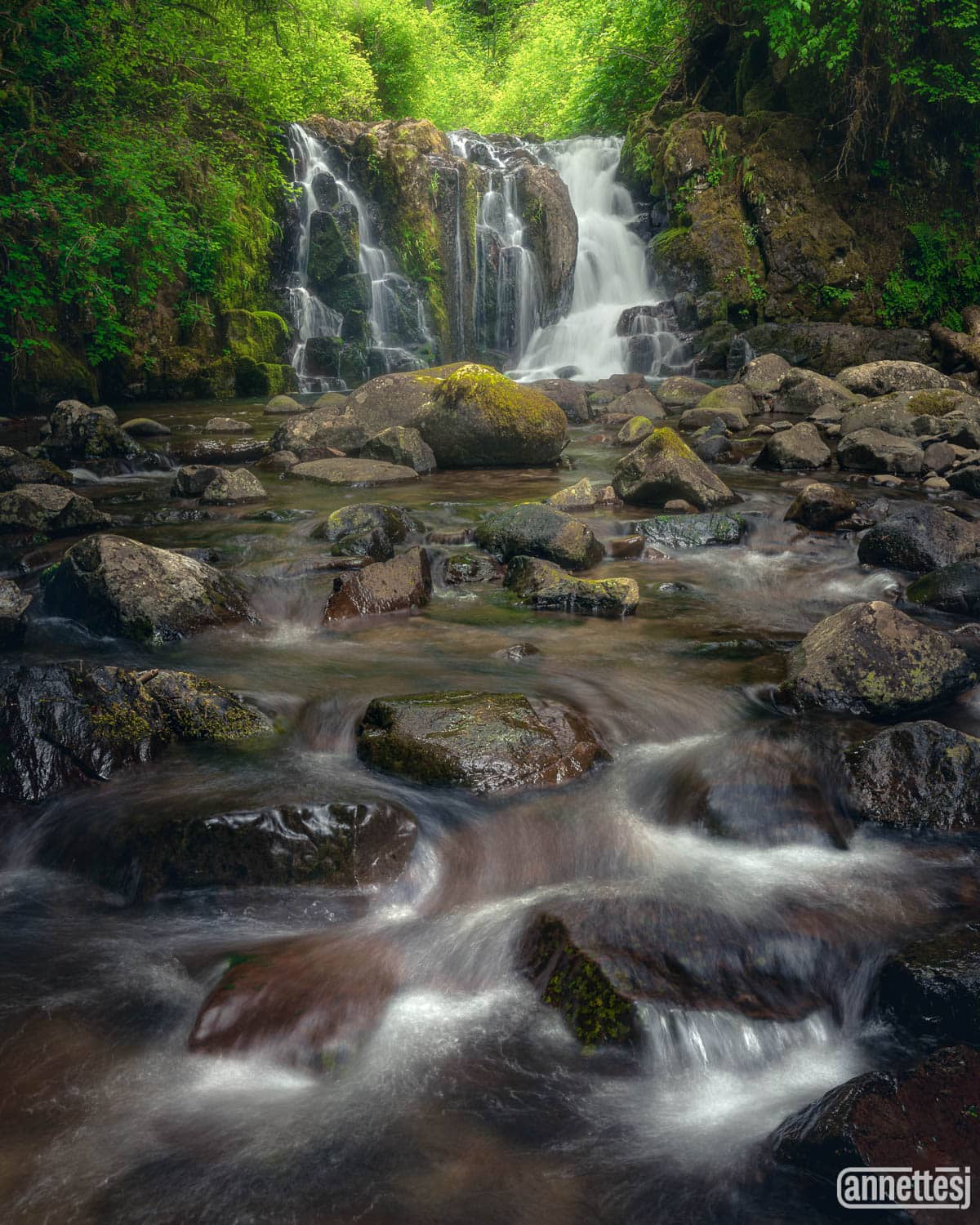
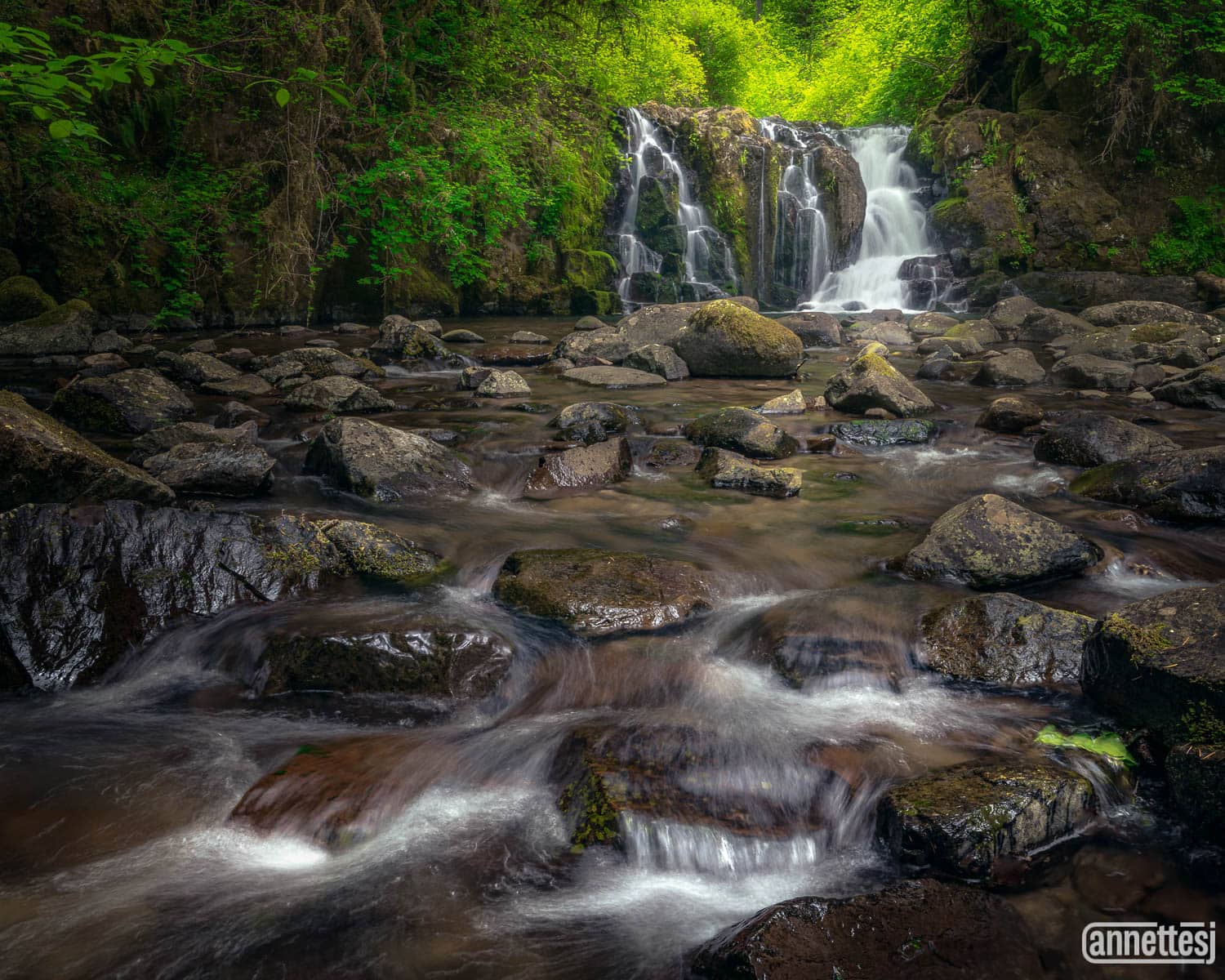
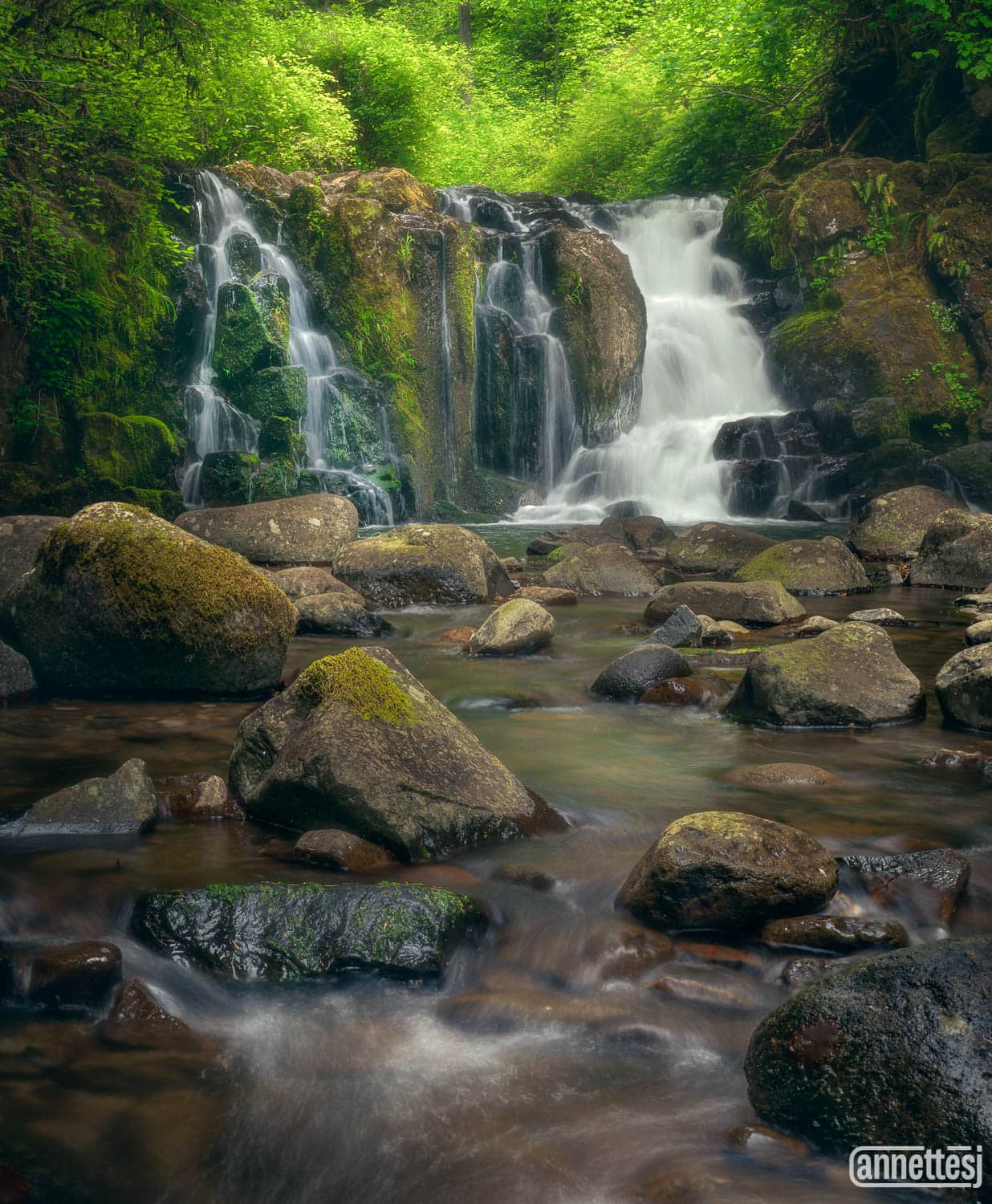
Crystal Falls was one of the most compositionally diverse locations of the day. The flowing water and rocks in the foreground naturally guide the viewer toward the waterfall in the background, creating strong leading lines and a sense of depth. For these images, I used a 16–35mm lens with a polarizing filter and photographed at approximately one-third of a second to maintain some movement in the water while preserving texture. Because the rocks were positioned very close to the camera while the waterfall remained farther away, focus stacking was necessary to achieve sharpness throughout the frame. A horizontal composition emphasized the flowing water and created an inviting pathway into the scene, giving the impression that a viewer could step directly into the landscape and experience the waterfall firsthand. A vertical composition shifted attention toward the waterfall itself while still using the foreground water as a visual pathway. By moving closer, I was also able to create a more intimate interpretation of the waterfall that focused attention on the falls while reducing the prominence of the surrounding environment. The variety available at this single location demonstrates how exploring multiple perspectives can dramatically expand your photographic opportunities.
Majestic Falls: Capturing the Entire Landscape
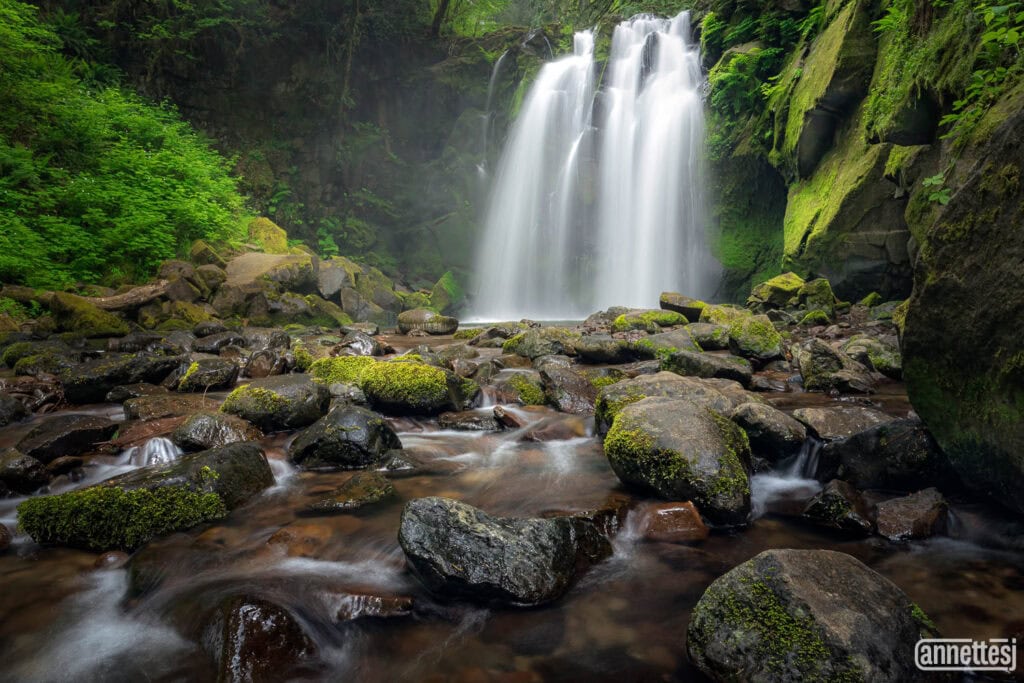
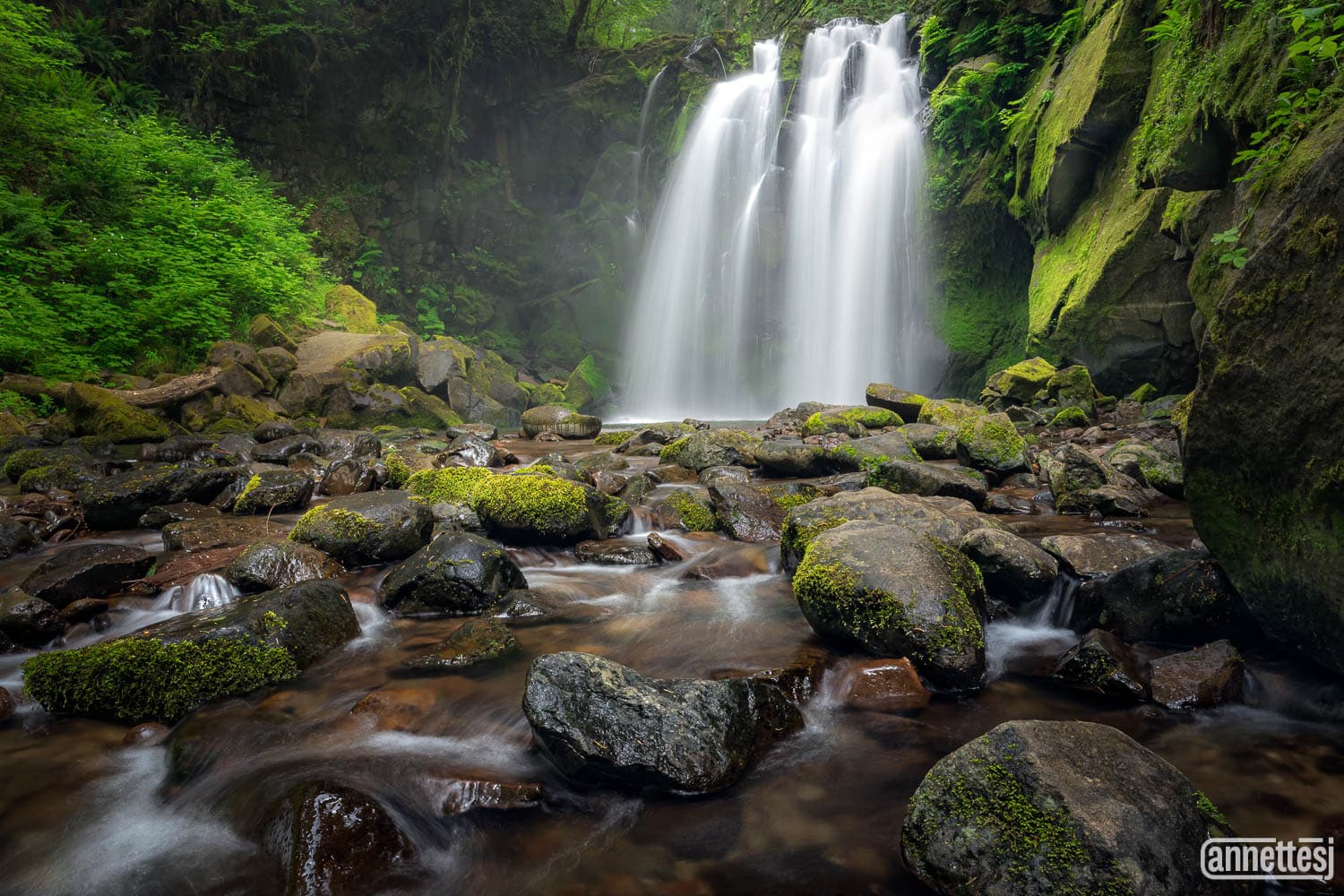
The third waterfall of the day was Majestic Falls, and it quickly became my favorite location along the trail. The waterfall plunges into a lush ravine filled with moss-covered rocks, ferns, bright green foliage, and a winding stream. While there is a viewing platform above the falls, a trail beneath the platform leads to a much more immersive perspective near the base of the waterfall. Photographing from this lower vantage point creates a stronger connection between the viewer and the landscape and reveals many of the environmental elements that make this location so special.
Why Wide-Angle Waterfall Photography Worked Best at Majestic Falls
Unlike Royal Terrace Falls, where distractions made a telephoto lens the best choice, Majestic Falls benefited greatly from a wide-angle composition. Every element surrounding the waterfall contributed to the atmosphere of the scene, including the moss-covered rocks, vibrant vegetation, mist-filled air, and stream flowing toward the viewer. Rather than isolating the waterfall, I wanted to include all of these elements and create an image that felt immersive. Photographing from a low position near the ground helped emphasize the stream in the foreground while drawing the viewer deeper into the image. The resulting photograph captures not only the waterfall itself but also the feeling of standing within this beautiful emerald-green ravine. For photographers interested in Oregon waterfall photography, Majestic Falls demonstrates how important the surrounding environment can be in creating an immersive image.
Little McDowell Falls: Wide-Angle and Telephoto Waterfall Photography
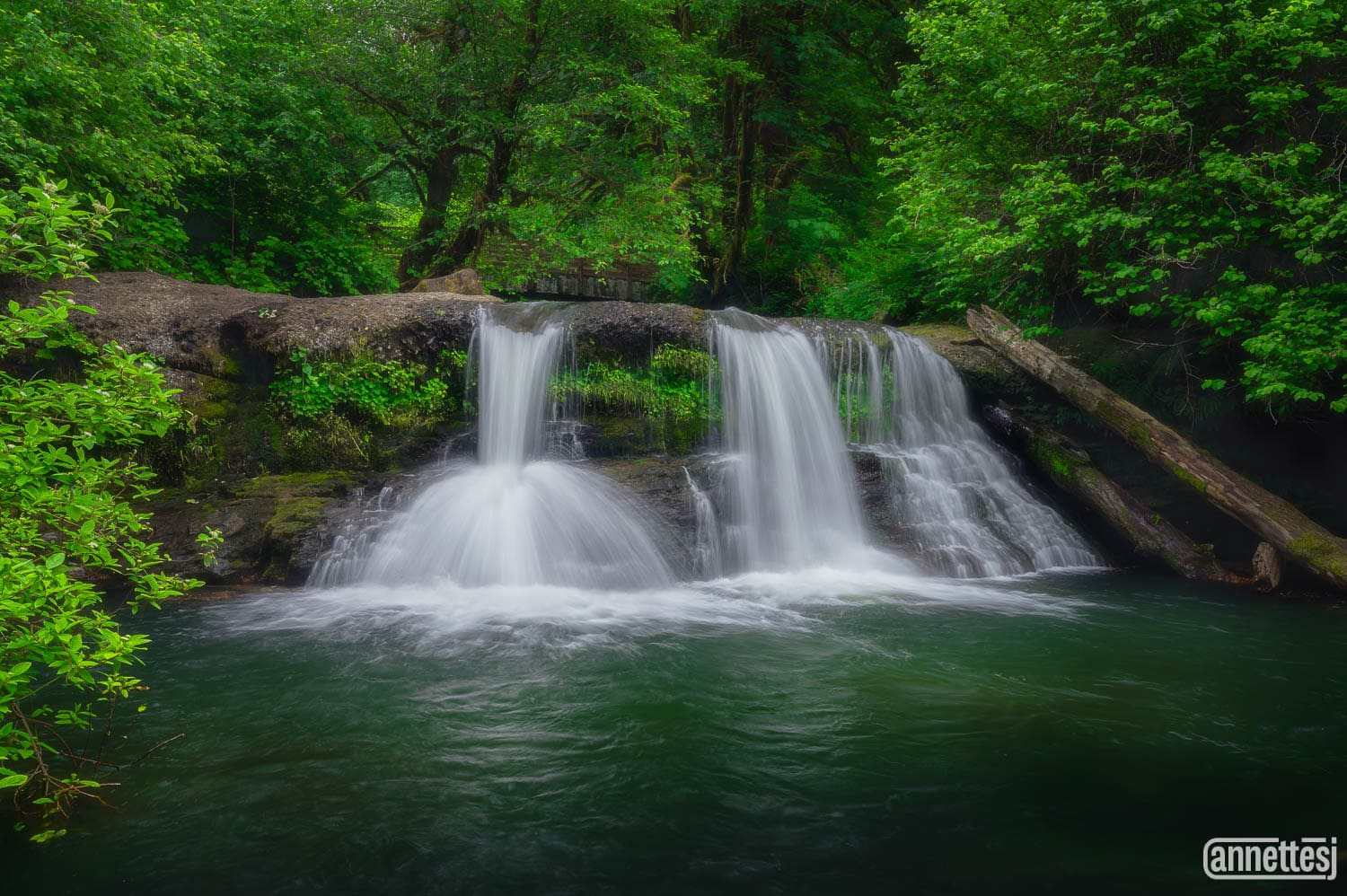
The final waterfall of the day was Little McDowell Falls, which presents a very different character than the previous locations. The waterfall contains several distinct sections and intricate patterns that make it appealing for both wide-angle and telephoto photography. My initial approach was to capture wide-angle images that included the full waterfall and the surrounding trees, but I also planned to create telephoto compositions focused on the fascinating patterns formed by the flowing water.
Waterfall Photography Settings for Moving Water and Windy Conditions
When photographing Little McDowell Falls, I used a shutter speed of approximately one-third of a second to create movement in the water while avoiding the overly soft appearance that can occur with longer exposures when water flow is strong. Because leaves throughout the scene were moving in the breeze, I also captured additional exposures at much faster shutter speeds to freeze the foliage. These images can later be blended during post-processing to combine the smooth water from the long exposure with sharp leaves from the faster exposures. This technique helps preserve important detail while maintaining the look of flowing water. I also chose to photograph from a slightly higher perspective because the open water in front of the falls did not contribute strong leading lines or foreground interest. By excluding much of this negative space, I was able to keep attention focused on the waterfall itself while using the surrounding trees to frame the composition.
The Power of Telephoto Waterfall Photography
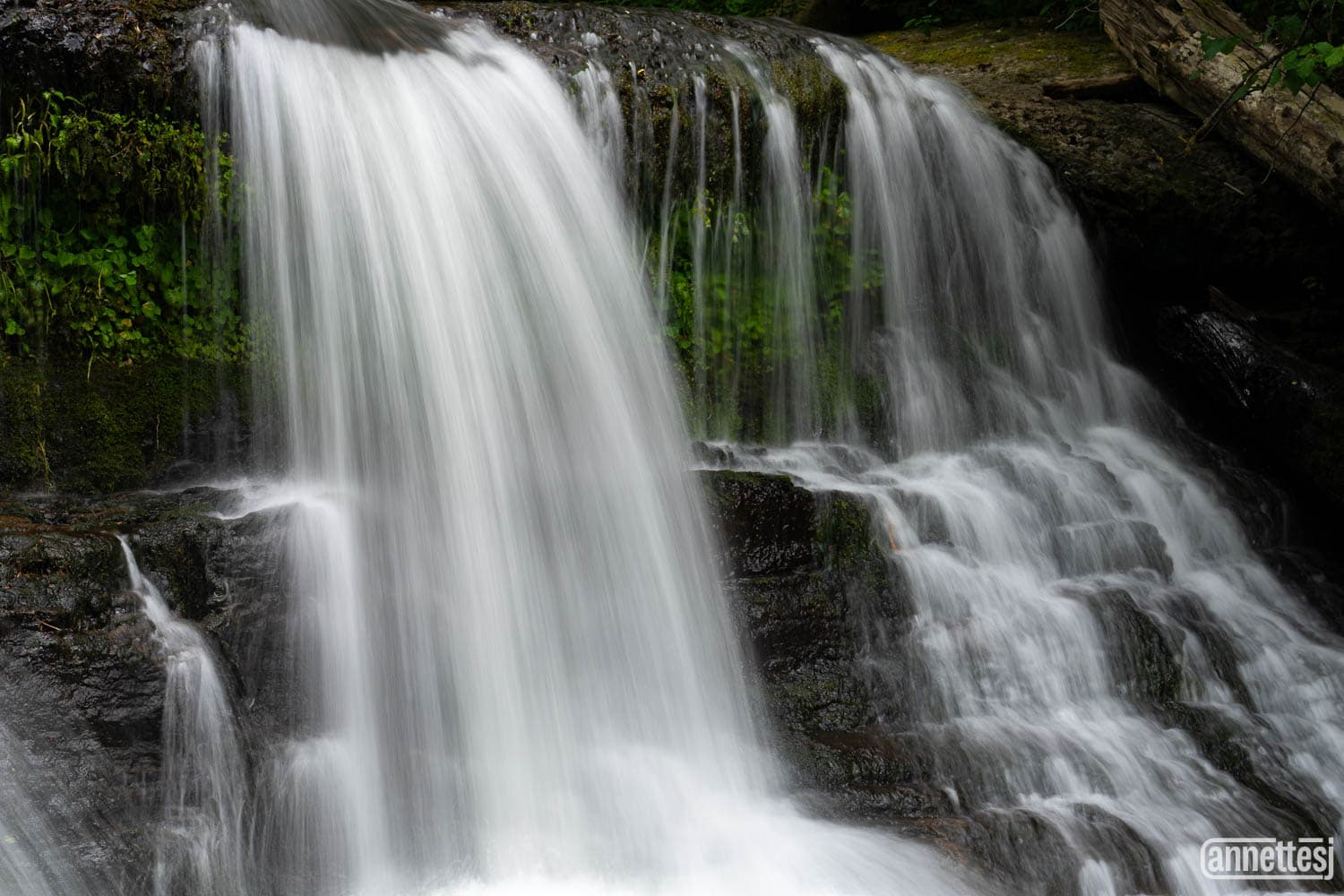
While many photographers immediately reach for a wide-angle lens when photographing waterfalls, telephoto compositions can often create equally compelling waterfall photography by simplifying the scene and emphasizing detail. Little McDowell Falls was particularly well suited to this approach because of the intricate fans and patterns created by the flowing water. By zooming in on individual sections of the waterfall, I was able to highlight details that might otherwise be overlooked in a wider composition. These intimate images create a sense of proximity and allow viewers to appreciate the texture, movement, and complexity of the water itself.
Waterfall Photography at McDowell Creek Falls Park
McDowell Creek Falls Park offers an incredible variety of opportunities for waterfall photography. From the layered tiers of Royal Terrace Falls to the expansive foregrounds of Crystal Falls, the lush surroundings of Majestic Falls, and the intricate patterns found at Little McDowell Falls, each waterfall encouraged a different compositional approach. Whether using a wide-angle lens to showcase the surrounding landscape or a telephoto lens to isolate details, understanding the strengths of each technique can help create stronger images. For photographers interested in Oregon waterfall photography, McDowell Creek Falls Park is a destination well worth visiting.
Explore My Waterfall Photography Prints
If you enjoy photographing waterfalls or simply appreciate the beauty of these landscapes, I invite you to explore my collection of waterfall photography prints. The gallery features waterfalls from Oregon, Washington, and beyond, available as fine art prints, canvas wraps, metal prints, and acrylic wall art. Whether you’re looking to bring the beauty of the Pacific Northwest into your home or searching for inspiration for your next photography adventure, you’ll find a wide variety of waterfall images to explore.
Check out the prints of Majestic Falls and Crystal Falls here.